
I want to get things done. I really do. But some days my energy is gone before I’ve even opened my laptop, and it’s not because the workload is huge. It’s the phone call sitting in the middle of my morning. The appointment I’ve been half thinking about since I woke up. Too many plans crammed into one week. Just having to be “on” for longer than I have it in me to be.
For a long time I thought the answer was trying to squeeze more productivity out of myself. Push through, power on, do the thing anyway. What actually changed things for me was paying attention to where my energy was going in the first place, not just how much time I had. Once I started noticing that, a few patterns became obvious, and these are the ones that have actually stuck.
1. Batch your “Extroverting”
I used to scatter calls, appointments and anything people-heavy across the whole week. A call on Monday, an appointment Wednesday, a meeting Friday. Every single one of those meant switching into “on” mode, and every time I switched, I lost momentum somewhere else.
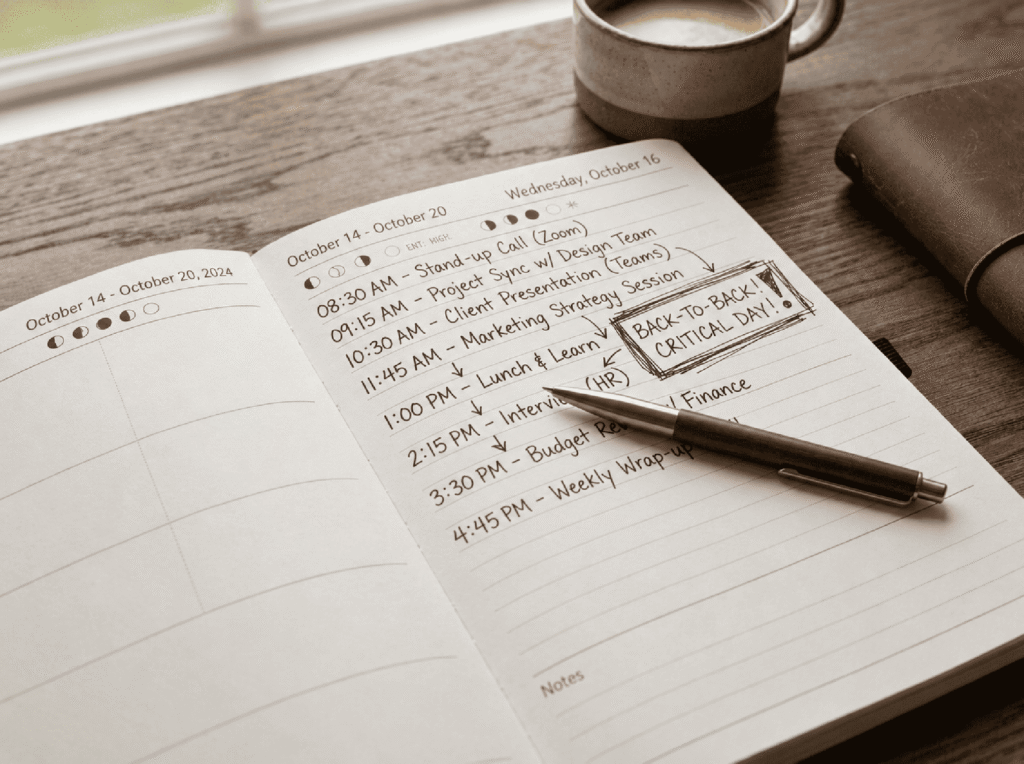
Now I try to group that stuff together where I can. If I’ve got a call to make, I’ll see what else can happen the same day, rather than spreading it out and paying the social cost four separate times. It’s not always possible, but when it works, I notice the difference immediately.
2. Protect your first hour
My own thoughts disappear fast once other people’s priorities start showing up. One message, one notification, and suddenly I’m reacting instead of thinking. So I try to get something that actually matters done before I make myself available to anyone else.
It doesn’t need to be a big task. It just needs to happen before the emails and messages start pulling my attention in six directions. That first hour is mine, or at least I try to make it mine, before the day decides otherwise.
3. Front-load your most draining task
If I know something draining is coming later in the week, like an appointment or a conversation I’m not looking forward to, I’d rather it just happen. The anticipation costs me more than the thing itself usually does.
When I have any control over the timing, I move it earlier. I’d rather deal with it on Tuesday than spend until Friday with it quietly sitting in the back of my mind, taking up space I could be using for something better.
4. Know the difference between being lonely and being peopled-out
This one took me a while to actually notice. There’s a strange overlap between wanting connection and wanting everyone to leave me alone, and for a long time I assumed they were the same feeling.
Now I try to check in with myself before I automatically make plans, call someone, or retreat further into silence. Sometimes what feels like needing space is actually loneliness in disguise, and sometimes what feels like loneliness is really just me being peopled-out and needing to be left alone for a bit longer.
5. Text first, call second
There’s a real difference between a conversation I’ve planned for and my phone ringing when I’m mentally somewhere else entirely. One I can prepare for. The other makes me stare at the screen wondering if I can pretend I didn’t see it.
Where I can, I’ll ask for a text first so I know a call is coming and can actually get myself ready for it. An unexpected call still gets me every time, and I don’t think that’s ever going to change.
6. Track your energy, not just your time
I used to plan my week around how much time something would take. These days I think more about what it will cost me. Two things can take exactly the same forty five minutes and leave me in completely different states afterwards.
A work call and a casual coffee might both be an hour, but one leaves me fine and the other leaves me needing to lie down for a bit. I’m not trying to eliminate the draining stuff entirely. I just want to know the cost before I agree to it, so I’m not blindsided later.
7. Have difficult conversations in motion

Something about sitting across from someone, fully focused on a hard conversation with nowhere else to look, makes everything feel heavier for me. I’ve found those same conversations so much easier when I’m walking, driving, or doing something with my hands.
If I know a conversation is coming that I’m dreading, I’ll try to have it while we’re walking somewhere or in the car rather than sitting down face to face. It sounds like a small thing. It genuinely makes a difference.
8. Schedule a recharge buffer
I’ve learned not to go straight from something draining into whatever’s next. Even fifteen or thirty minutes in between changes everything. During that buffer I’m not answering messages or squeezing in one more task. I’m just letting myself come back down.
Skip that buffer and I end up losing half the afternoon anyway, just less usefully, because I’ve pushed myself straight into the next thing running on empty.
9. Give yourself one completely off day

There’s a difference between technically not working and actually having no demands on you. I used to call days off when I just wasn’t sitting at my laptop, even though my phone was still full of calls to return and plans to keep.
My version of an actual off day has as few of those things as possible. Minimal plans, no calls I have to make, nothing I’m obligated to show up for. I don’t always manage a full one. But removing as many optional demands as I can, even for part of a day, makes a real difference.
10. Create an escape hatch before you need one
This is the one I’d tell anyone to start with. Have a small, predetermined escape ready for the moment you feel yourself reaching capacity but can’t just cancel the rest of the day.
Mine tends to be sitting in the car for five minutes, or stepping outside with headphones on for a short walk. Nothing dramatic. The important part is deciding what it is before you actually need it, because when you’re already overwhelmed, you don’t have the energy left to figure that out.
11. Stop filling every quiet moment
I’ll finally get a bit of peace and then immediately fill it. TikTok, a podcast, a YouTube video, music, checking messages. Being alone and having no input are not the same thing, and I had to catch myself doing this more than once before I noticed the pattern.

Actual quiet, the kind with nothing playing and nothing to scroll, is where I do my best thinking. It’s also where I get things done, because my brain finally has room to work on something instead of absorbing something else.
12. Don’t let tomorrow’s conversation ruin today
I can spend hours mentally rehearsing a conversation that will take ten minutes. Anticipating how someone might respond, imagining three different versions of how it goes, replaying what I’m going to say before I’ve even said it once.
What actually helps is catching myself doing it and bringing my attention back to what’s in front of me right now. The conversation will happen when it happens. Living through it five times beforehand doesn’t make it easier. It just uses up energy I need for today.
Bonus: Audit your yeses before you give them
I used to agree to things in the moment and then wonder five minutes later why I’d said yes. Now I have a default response: “Let me check and get back to you.”
It buys me the space to actually think about whether I want to do something, instead of agreeing on the spot and figuring out how to get out of it later. Preventing a commitment is so much easier than recovering from one.
Build a life you don’t constantly need to escape from
None of this is really about cramming more into a day or becoming someone who’s never drained. The bigger question is why I kept needing to recover in the first place.
Slowly, I’ve been designing my days and weeks around what I actually know about myself. Fewer unnecessary commitments. More intentional quiet. Protecting the hours where my thinking is best. Noticing when my battery is getting low before it’s already empty.
Getting more done doesn’t always mean doing more. Sometimes it just means spending the energy you already have a bit more deliberately.